
A great way to connect.
What Are the Top LED Light Connector Types in 2026?
The LED lighting market is expanding, but connector choices are becoming more complicated. Grand View Research estimates that the global LED lighting market will continue growing strongly through 2030. MarketsandMarkets also identifies commercial, architectural, and smart lighting as major demand areas. These trends increase pressure on small components. A loose terminal can interrupt an entire linear fixture.
This guide examines the main led light connectors expected to matter in 2026. Options include wire-to-board connectors, board-to-board systems, COB connectors, strip-light connectors, push-in terminals, and waterproof screw-lock designs. Each type serves a different installation reality. A retail display may need tool-free replacement. An outdoor sign may need IP-rated sealing, strain relief, and stable contact pressure. Indoor appearance matters too. Visible wires can weaken an otherwise refined lighting project.
Menno Treffers, Secretary General of the Zhaga Consortium, has emphasized, “Interoperability is essential for the future of smart lighting.” That principle applies directly to connector selection. A connector should not only fit today’s LED board. It should support thermal movement, driver compatibility, maintenance access, and future upgrades. UL Solutions, IEC standards, and manufacturer datasheets provide useful verification points, although they do not remove every installation risk. Reports often group connectors inside broader lighting categories, so precise connector-market figures remain difficult to compare. That is an important limitation. Real-world testing still matters. The best connector on paper may fail beside condensation, vibration, or repeated servicing.
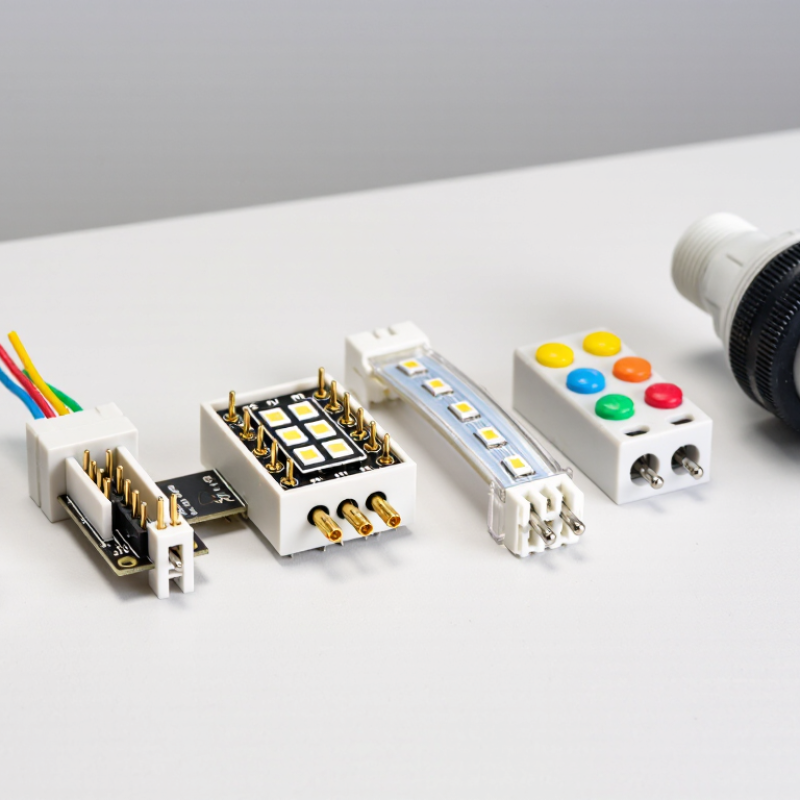
LED Light Connectors: Definition, Purpose, and Basic Structure
An LED light connector is a component that creates a removable electrical and mechanical link. It transfers power from a driver, cable, or circuit board to an LED module. In practical installations, it also supports alignment and reduces stress on delicate wires. Unlike a loose wire splice, a suitable connector offers controlled contact pressure and safer maintenance. Fit alone is not enough. Heat, moisture, vibration, and current load can affect long-term performance.
Its basic structure usually includes an insulating housing, conductive contacts, a locking feature, and cable entry points. Some designs add gaskets or sealing rings for damp locations. The most common 2026 connector types include wire-to-wire, wire-to-board, board-to-board, strip-light clip, and waterproof circular connectors. Each type serves a different layout. Wire-to-wire models extend or join cables, while wire-to-board connectors attach conductors directly to a lighting circuit.
In field inspections, I check polarity, contact tightness, conductor size, and the connector’s temperature rating. A connector may click into place yet still create resistance if the contact is poorly crimped. That small error can cause flicker, heat buildup, or gradual discoloration. I have also found that installers sometimes choose waterproof housings without checking the actual sealing method. This distinction is easy to miss. Reliable selection requires matching electrical ratings, environmental protection, installation space, and expected service access.:VEVENT
What Are the Top LED Light Connector Types in 2026? – LED Light Connectors: Definition, Purpose, and Basic Structure
| Connector Type | Definition and Basic Structure | Common LED Lighting Uses | Typical Contact Arrangement | Typical Electrical Range* | Main Advantages | Important Selection Factors |
|---|---|---|---|---|---|---|
| Screw Terminal Connector | A removable connection made with a metal terminal, clamping screw, and insulating housing. The conductor is secured mechanically under the screw. | LED drivers, power supplies, control cabinets, signage, and fixed indoor installations. | Usually 2, 3, or more positions; commonly positive and negative terminals for DC LED circuits. | Approximately 2–15 A and up to about 300 V, depending on terminal size, spacing, insulation, and certification. | Simple wiring, strong mechanical retention, broad wire-size compatibility, and easy field servicing. | Correct tightening torque, exposed-contact protection, conductor type, vibration, and required safety spacing. |
| Push-In or Spring-Clamp Connector | A spring mechanism holds a stripped wire or ferrule against a conductive contact without a screw connection. | LED strip installations, compact luminaires, junction boxes, and rapid maintenance work. | Commonly 2 conductors for single-color LED circuits; 3–5 conductors for multi-channel or tunable-white systems. | Approximately 2–10 A and up to about 300 V, depending on the specific construction and wire size. | Fast installation, consistent contact pressure, reduced tool requirements, and good resistance to loosening from vibration. | Wire gauge range, solid versus stranded conductors, release method, temperature rating, and available space. |
| Crimp Connector | A terminal is permanently compressed around a conductor using a crimping tool, often inside a plug, socket, or sealed housing. | LED modules, automotive lighting, outdoor luminaires, flexible wiring harnesses, and vibration-prone equipment. | Typically 2–6 contacts; higher-position housings are available for RGB, RGBW, sensor, and control connections. | Approximately 1–15 A and up to about 600 V, depending on contact size, housing design, and applicable standards. | Reliable when correctly crimped, suitable for repeated harness production, and available in sealed versions. | Correct terminal and wire compatibility, crimp quality, pull-out strength, sealing method, and inspection requirements. |
| Quick-Disconnect Plug and Socket | A mating pair with male and female contacts, usually including a latch or locking feature for tool-free connection and disconnection. | Modular LED fixtures, replacement light engines, cabinet lighting, and detachable power leads. | Usually 2–4 power contacts; additional contacts may carry dimming, sensing, or data signals. | Approximately 1–10 A and up to about 300 V, subject to contact pitch, insulation, and product certification. | Fast replacement, clear mating orientation, reduced wiring time, and convenient modular design. | Locking strength, keying, touch protection, mating-cycle rating, cable flexibility, and connector polarity. |
| Waterproof Circular Connector | A circular plug-and-socket assembly that uses a threaded, bayonet, or locking coupling and sealing elements such as O-rings or gaskets. | Outdoor LED strips, landscape lighting, façade lighting, floodlights, and wet-location installations. | Commonly 2–5 contacts for power; larger versions may include separate control or communication contacts. | Approximately 2–20 A and up to about 500 V, depending on contact size and environmental rating. | Improved protection against water, dust, ultraviolet exposure, and outdoor handling when properly installed. | The actual IP rating, cable diameter, UV resistance, operating temperature, sealing compression, and mating orientation. |
| LED Strip Clip Connector | A low-profile connector with spring or piercing contacts that clamp onto copper pads on a flexible LED strip. | Tool-light installation of single-color, tunable-white, RGB, or RGBW flexible LED strips. | Typically 2 contacts for single-color strips, 3 for tunable white, 4 for RGB, and 5 for RGBW strips. | Often approximately 2–5 A at low-voltage DC; the safe current depends strongly on contact size and strip construction. | Quick installation, no soldering in many cases, and easy creation of straight or corner connections. | Strip width, copper-pad layout, strip thickness, contact pressure, current capacity, and whether the connection is sealed. |
| Board-to-Wire Connector | A plug or socket system joining a cable to a printed circuit board through pins, receptacles, or surface-mounted contacts. | LED drivers, control boards, display modules, sensors, and compact luminaires. | Usually 2–12 contacts, with single-row or double-row configurations for power and control signals. | Approximately 0.5–10 A and up to about 300 V, depending on pitch, contact geometry, and insulation system. | Compact footprint, controlled assembly, polarity options, and easy separation of the electronics from the wiring harness. | Pin pitch, mating height, current per contact, retention force, soldering process, and required vibration performance. |
| Board-to-Board Connector | A mating contact system that directly joins two printed circuit boards without a separate cable between them. | Modular LED drivers, control panels, display systems, and compact lighting electronics. | Commonly 2–40 or more contacts, depending on power, dimming, sensing, and communication needs. | Approximately 0.3–5 A per contact and generally low-voltage DC; total capacity depends on contact count and thermal design. | Very compact, low wiring complexity, repeatable assembly, and efficient use of enclosure space. | Alignment tolerance, board spacing, contact durability, vibration, thermal expansion, and access for servicing. |
| IDC or Ribbon-Cable Connector | An insulation-displacement connector that cuts through cable insulation to contact conductors arranged in a flat ribbon cable. | LED control panels, addressable lighting systems, test fixtures, and low-current signal distribution. | Often 4–20 contacts; commonly used for logic, data, and low-current control rather than high-power LED loads. | Typically below 1 A per contact and generally low-voltage DC, subject to pitch and cable specifications. | Efficient multi-conductor termination, consistent pin ordering, and fast assembly without stripping each wire. | Cable pitch, signal integrity, polarization, strain relief, bend radius, and protection from moisture and contamination. |
| Waterproof Wire-to-Wire Connector | A sealed connector pair that joins two cable ends using crimped contacts, a locking housing, and individual wire seals. | Outdoor LED signage, architectural lighting, garden lighting, and replaceable cable assemblies. | Usually 2–6 contacts for power, color channels, dimming, or basic control signals. | Approximately 1–15 A and up to about 500 V, depending on contact size, spacing, and sealing system. | Protects individual conductors from moisture, supports modular cabling, and performs well in demanding environments. | Seal compatibility, cable outer diameter, IP test conditions, locking reliability, corrosion resistance, and field assembly quality. |
Related Posts
-
2026 Best LED Connectors for Global Buyers?
-

Top Strategies for Enhancing Performance with LED Connectors
-
What is the Importance of LED Wire in Modern Lighting Solutions
-
Top 5 LED Light Wire Connectors for Easy and Reliable Connections
-
How to Choose the Best LED Light Wire Connectors for Your Needs?
-
2026 How to Choose the Best Strip Light Connectors?