2026 Best LED Connectors for Global Buyers?

Choosing the right led connectors in 2026 requires more than comparing unit prices. Global buyers now evaluate energy performance, thermal stability, installation speed, and supply continuity together. The International Energy Agency reports that lighting represents about 15% of global electricity consumption. The U.S. Department of Energy also notes that LED systems can use substantially less energy than incandescent lighting. These figures explain the market’s direction, but they do not guarantee connector reliability.

Industry forecasts from MarketsandMarkets and Grand View Research continue to show strong growth in LED lighting and related components. That growth increases product variety, but also creates confusion. A connector rated for indoor signage may fail beside a hot industrial luminaire. A compact plug may fit neatly, yet its current rating could be inadequate. Small details matter.

This guide compares led connectors through practical, internationally relevant criteria. It examines voltage and current capacity, wire compatibility, contact resistance, locking strength, IP protection, operating temperature, and installation cycles. It also considers IEC 60598-1, IEC 61984, UL requirements, and regional conformity expectations. These standards provide useful boundaries, although certification marks alone cannot replace application testing.

Real purchasing experience suggests that the cheapest connector is rarely the cheapest system choice. Rework, corrosion, loose contacts, and shipping delays can quickly change the calculation. Still, no single connector suits every climate, fixture, or production line. That limitation deserves attention. The best option depends on the complete assembly, not the connector in isolation. This 2026 overview helps buyers compare leading designs with clearer evidence, realistic trade-offs, and fewer assumptions.
2026 Best LED Connectors for Global Buyers?

LED Connector Basics and Key Types for 2026

LED connectors are the small parts that keep lighting systems electrically stable. They join LED strips, boards, wires, and power supplies without soldering every connection. A connector must match voltage, current, polarity, wire size, and contact spacing. A correct fit is more important than a quick fit.

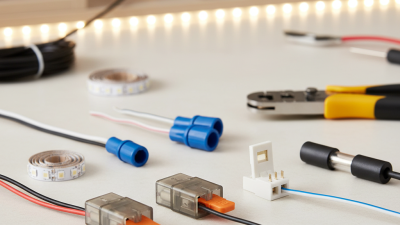
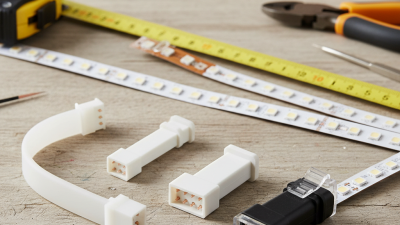
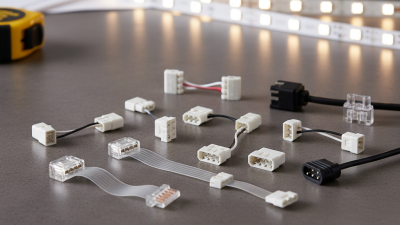
The main types include wire-to-wire, wire-to-board, board-to-board, and strip connectors. Strip connectors may be solderless, clip-on, or piercing styles. Choose two-pin connectors for single-color strips. RGB and addressable lighting often need three, four, or five contacts. Waterproof connectors help outdoor projects, but their protection depends on sealing quality and installation. An IP rating alone does not fix poor cable entry.

Check the connector’s rated current before installation. Thin contacts can heat under continuous loads. Measure the strip width, contact pitch, and copper pad layout carefully. A connector may look compatible and still cause flickering. I have found that loose clips are common after repeated bending. This detail is easy to miss. Test a sample under full load for several hours. Also inspect the connection after heating and cooling cycles. Some designs work well on a workbench but fail inside a warm aluminum profile. Selection remains partly practical, not purely technical. Suppliers should provide drawings, material details, temperature ranges, and test data. Images are helpful, but they are not enough.

2026 Best LED Connectors for Global Buyers: LED Connector Basics and Key Types

LED connector selection is closely related to the number of electrical conductors required by the lighting function. Single-color LED systems generally use two conductors for power, while tunable white, RGB, RGBW, and addressable systems require additional contacts for separate channels or data signals. Always verify voltage, current, wire gauge, polarity, environmental protection, and controller compatibility before installation.

How to Match Connectors with LED Applications

2026 Best LED Connectors for Global Buyers?
How to Match Connectors with LED Applications

Choosing an LED connector starts with the application, not the catalog photograph. Indoor strip lighting may need compact, tool-free connectors. Outdoor signage needs stronger seals, locking joints, and suitable IP protection. Check the LED system’s voltage, current, wire size, and operating temperature before selection. A connector rated for 12 volts may not suit a higher-load installation. Small details matter.

For high-density lighting, examine contact resistance and heat buildup. Poor contact pressure can create flickering, discoloration, or melted insulation after months of use. In humid areas, use corrosion-resistant contacts and verify the sealing method. For moving displays, choose flexible cable support and a connector that resists repeated bending. During site work, I have seen installers trust the connector rating while ignoring cable strain. That mistake is expensive. Testing under real load is wiser than relying on printed specifications alone.

Tips: Confirm polarity with a meter. Measure the actual cable diameter. Leave room for maintenance access. Test several samples before large orders. I would also question extremely low prices. They may reflect thinner contacts, weaker housings, or inconsistent tolerances. However, over-specifying every connector can waste space and budget. The best match balances protection, electrical capacity, installation speed, and expected service conditions. Procurement teams should request drawings, material details, batch inspection records, and clear operating limits from qualified suppliers.

2026 Best LED Connectors for Global Buyers? - How to Match Connectors with LED Applications

Connector Type Best LED Application Typical Pitch / Size Typical Current Rating* Typical Voltage Range* Environmental Protection Locking Method Key Selection Considerations
Wire-to-Board Connector LED modules, indicator boards, small display panels and low-power lighting assemblies 1.25 mm, 2.00 mm or 2.54 mm pitch 0.5–3 A per contact 30–250 V DC, depending on design Usually IP20; sealed versions available Friction lock, latch or positive lock Confirm contact pitch, wire gauge, mating height, polarity and PCB layout before ordering.
Board-to-Board Connector LED driver boards, smart luminaires, display control boards and compact assemblies 0.50 mm, 0.80 mm or 1.27 mm pitch 0.5–2 A per contact 30–100 V DC, depending on contact spacing Generally IP20 and intended for enclosed equipment Guide posts, friction fit or latch Match stacking height, mating cycles, alignment tolerance and vibration requirements.
LED Strip Snap Connector Indoor flexible LED strips used for cabinets, shelves, signage and decorative lighting Commonly 8 mm, 10 mm or 12 mm strip width 2–5 A total, depending on contact design Typically 5 V, 12 V or 24 V DC Usually IP20; limited water-resistant versions available Snap cover or clamp Match strip width, number of conductors, copper-pad layout and strip thickness.
Solderless Strip-to-Wire Connector Fast installation of single-color, tunable-white or RGB/RGBW LED strips 2-pin, 3-pin, 4-pin or 5-pin; 8–12 mm strip width 2–5 A total, depending on contact resistance Typically 5–24 V DC IP20 to approximately IP65 for selected sealed designs Latch, clamp or gel-filled cover Check wire exit direction, conductor spacing, strip coating and whether the connector pierces or clamps the PCB pads.
Waterproof Inline LED Connector Outdoor strip lights, garden lighting, façade lighting and wet-location LED modules 2–5 contacts; cable diameter commonly 3–8 mm 2–10 A per contact, depending on contact size Typically 12–48 V DC IP65, IP67 or IP68 versions available Threaded coupling, bayonet or over-molded seal Verify the complete mated assembly rating, cable jacket material, UV resistance and sealing-gasket quality.
Circular M8 / M12 Connector Industrial LED machines, inspection lighting, outdoor controls and modular luminaires M8 or M12 threaded body; 2–8 contacts commonly used Approximately 2–4 A per contact 30–250 V AC/DC, depending on coding and configuration Commonly IP67 when fully mated Threaded coupling nut Select pin count, coding, cable length, shielding and panel-mount or cable-mount format.
Terminal Block Connector LED power supplies, signage cabinets, constant-current drivers and serviceable wiring 3.50 mm, 5.00 mm, 5.08 mm or 7.62 mm pitch 5–20 A per position, depending on wire size 150–300 V AC/DC typical Usually IP20; enclosure protection is normally required Screw clamp, spring clamp or pluggable latch Prioritize wire range, torque specification, touch protection, creepage distance and field-service access.
High-Current Power Connector High-output LED panels, stage lighting, architectural floodlights and DC distribution 3.96–7.62 mm pitch or dedicated power-contact geometry 10–30 A per contact, subject to wire size and temperature rise Typically 12–60 V DC IP20 to IP67, depending on housing and application Positive latch, lever lock or threaded coupling Calculate continuous load, inrush current, voltage drop, contact temperature and derating at the installation ambient temperature.
COB LED Holder / Chip Carrier Replaceable COB LED light engines, spotlights, downlights and thermal-module assemblies Matched to COB package dimensions and pad arrangement Usually 1–5 A, depending on the LED module Commonly 20–100 V DC for series LED modules Normally IP20 inside a luminaire Spring contact, clip or screw-retained holder Match the exact COB footprint, electrical polarity, thermal interface and optical height.
Pluggable LED Driver Connector Commercial luminaires, emergency lighting, smart lighting and driver replacement systems 2–6 contacts; 2.50–5.08 mm pitch is common 2–10 A per contact Up to approximately 300 V AC/DC, depending on insulation system Usually IP20; installed inside a rated luminaire enclosure Plug-in latch, locking tab or screw flange Check mains-side insulation, touch protection, creepage and clearance, wiring sequence and maintenance requirements.

*Ratings shown are typical market ranges for orientation only. Actual current, voltage, temperature, ingress-protection and safety ratings depend on the exact connector construction, wire size, contact material, mating condition, installation method and applicable regional standards. Always verify the manufacturer’s technical drawing and certification documents before purchase.

Critical Standards for Global LED Connector Buyers

2026 Best LED Connectors for Global Buyers

Critical Standards for Global LED Connector Buyers

Global LED connector purchasing should begin with application conditions, not appearance or price. Check rated voltage, current, wire gauge, contact resistance, and operating temperature. A connector used inside a warm aluminum profile needs different protection from one installed outdoors. Small details matter.

Request test reports, material declarations, and production traceability from the supplier. Relevant requirements may include IEC performance standards, regional safety approvals, RoHS restrictions, and chemical compliance documentation. Do not treat a printed approval mark as complete evidence. Verify its scope, certificate number, and applicable product family. For outdoor systems, confirm the IP rating after assembly, not only before installation. Dust and water often enter through cable exits.

Mechanical reliability deserves equal attention. Review mating cycles, locking strength, strain relief, vibration resistance, and compatibility with the selected LED strip or module. A connector can pass an electrical test yet fail during repeated maintenance. That happens.

Ask for samples from normal production batches. Measure insertion force and inspect the crimp under magnification. It is also useful to test connectors after heat, humidity, and repeated bending. Some purchasing teams overlook packaging, although oxidized contacts can create field failures months later. Standards reduce risk, but they do not replace practical validation. Allow room for rechecking assumptions.

Comparing Materials, Performance, and Connector Reliability

For global LED buyers, connector reliability begins with material selection. Copper-alloy contacts provide stable conductivity and resist mechanical fatigue. Tin plating suits many indoor systems, while nickel or gold finishes can perform better in demanding environments. The housing also matters. Silicone tolerates heat and movement well, while polyamide offers useful rigidity and dimensional stability. I have seen inexpensive housings crack near sharp bends. Small failures can stop an entire lighting section.

Performance depends on more than rated current. Buyers should check voltage drop, contact resistance, operating temperature, wire size, and mating cycles. A connector may pass a short laboratory test but weaken after repeated assembly. Locking force should feel firm without needing excessive pressure. Polarity marks must remain visible after installation. For outdoor applications, sealing quality deserves close inspection. A stated protection rating is helpful, but poor cable strain relief can still allow moisture inside.

Reliable suppliers should provide material specifications, test records, production traceability, and sample units for independent evaluation. Inspect the crimp area under magnification. Uneven crimps often reveal rushed production. Request vibration, heat-aging, and insertion-cycle data when the project is critical. Do not rely on one attractive sample. Samples can be unusually well made. This is an uncomfortable point, but it deserves attention. Global shipping, storage temperature, and installer skill may also change real-world performance. A connector chosen on price alone may become the most expensive part after repeated maintenance.

A Practical Framework for Selecting LED Connectors in 2026

2026 Best LED Connectors for Global Buyers?

A Practical Framework for Selecting LED Connectors in 2026

LED connectors now face higher current, tighter spaces, and hotter enclosures. The International Energy Agency reports that lighting uses roughly 15% of global electricity. That makes connection reliability more important than it first appears.

Start with the application, not the catalog. Record operating current, voltage, wire size, switching cycles, and ambient temperature. Then check contact resistance and allowable temperature rise. A connector rated for 3 A may fail near a warm aluminum profile. IP protection also matters. Dust and condensation can enter through a weak seal, even inside a clean workshop.

The U.S. Department of Energy’s 2023 Solid-State Lighting R&D Opportunities report highlights thermal management, reliability, and interoperability as continuing industry priorities. These priorities should guide connector selection. For global projects, compare IEC-based testing, regional approval needs, traceability, and replacement availability. A low purchase price can become expensive after tooling changes or field failures.

Tips: Test a small batch before mass production. Measure temperature after continuous operation. Confirm crimp pull force with the actual wire. Check samples after repeated bending. Do not trust appearance alone. I have seen a strong-looking connector loosen after vibration testing. That result was inconvenient, but useful. Connector choices should leave room for imperfect assembly, because real production rarely matches the drawing.