Top 10 Rechargeable Lithium Batteries for Global Buyers?
Rechargeable Lithium Batteries have become essential in our modern lives. Their unique combination of high energy density and long life makes them ideal for various applications. From smartphones to electric vehicles, these batteries power the devices we rely on daily. However, not all rechargeable lithium batteries are created equal.
Choosing the right battery can be overwhelming. Factors such as capacity, longevity, and safety ratings must be considered. Each product has its strengths and weaknesses, making informed selection crucial. This article aims to guide global buyers through the top 10 rechargeable lithium batteries available today.
As we explore these options, we acknowledge the need for careful consideration. Transparency in battery performance can be lacking. We also find that user reviews may sometimes be biased. Navigating through these complexities is vital for making a reliable choice. The right rechargeable lithium battery can significantly impact your device’s performance and lifespan.
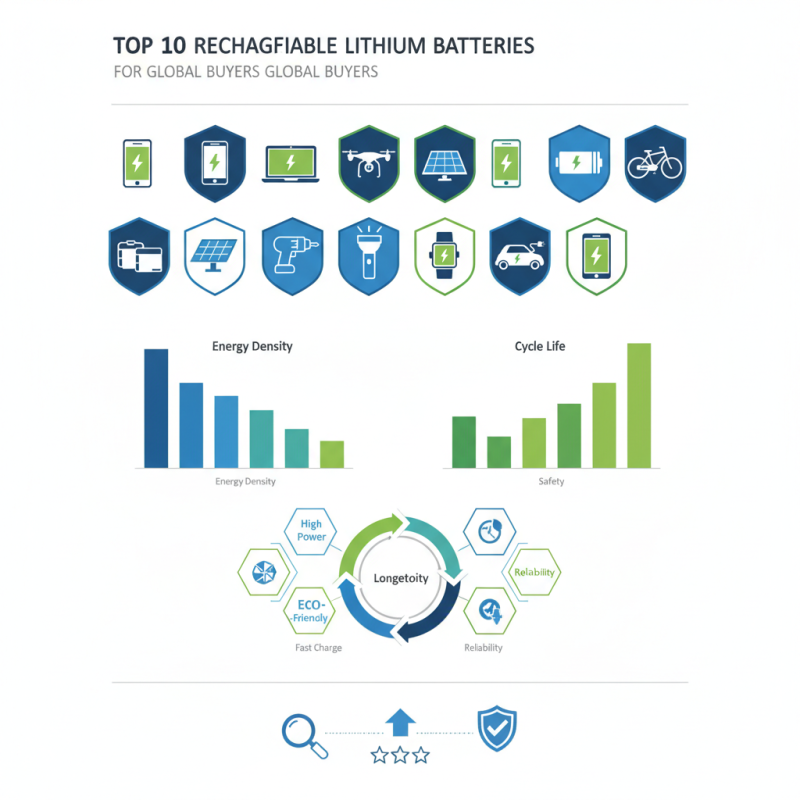
Overview of Rechargeable Lithium Batteries and Their Importance
Rechargeable lithium batteries have transformed how we power our devices. Their lightweight design and high energy density make them essential for modern technology. Unlike traditional batteries, they can be reused hundreds of times, boosting sustainability. These batteries play a critical role in reducing electronic waste.
The importance of rechargeable lithium batteries extends beyond just consumer electronics. They are vital for renewable energy systems, such as solar panels. These batteries store energy efficiently, enabling users to utilize power even when the sun isn't shining. Their capabilities in electric vehicles are also noteworthy, as they provide longer driving ranges. Still, the production of lithium batteries raises concerns about environmental impact and resource depletion.
Users must be aware of battery care and disposal. Improper handling can lead to safety hazards, while poor recycling practices can harm the environment. Investing in quality batteries and monitoring their usage can lead to better performance. Awareness and education are crucial in making the most of this technology while minimizing drawbacks. Balancing efficiency with sustainability remains a challenge in the ever-evolving battery landscape.
Top 10 Rechargeable Lithium Batteries Performance Comparison
This chart provides an overview of the capacity performance of the top 10 rechargeable lithium batteries. It enables global buyers to compare different options and make informed decisions based on battery capacity.
Key Factors to Consider When Choosing Lithium Batteries
When choosing rechargeable lithium batteries, several key factors come into play. The capacity is vital; it defines how much energy the battery can hold. A higher capacity means longer usage between charges. Look for batteries with clear milliamp-hour (mAh) ratings. This specification gives you a quick understanding of the battery's potential.
Another important element is the cycle life. This refers to how many charge and discharge cycles the battery can endure before its performance starts to degrade. A battery with a long cycle life is more cost-effective over time. Pay attention to warranty terms and conditions, as reliable manufacturers often provide substantial guarantees.
Charging time is also essential. Different models require varying lengths of time to reach full charge. Some users prefer fast-charging options, while others may opt for slower, longer-lasting charges. Compatibility with your devices must not be overlooked. Always check whether the battery fits the specific requirements of your gadgets. Making informed choices ensures you get the best performance without unnecessary waste.
Top 10 Rechargeable Lithium Batteries for Global Buyers
| Battery Type | Capacity (mAh) | Voltage (V) | Charge Cycles | Weight (g) | Price (USD) |
| 18650 | 2500 | 3.7 | 500 | 45 | 10 |
| 21700 | 4000 | 3.7 | 650 | 70 | 15 |
| 26650 | 5000 | 3.7 | 700 | 90 | 20 |
| LiFePO4 | 3000 | 3.2 | 2000 | 70 | 25 |
| CR123A | 1500 | 3.0 | 300 | 40 | 5 |
| AA | 2000 | 1.2 | 500 | 30 | 8 |
| AAA | 800 | 1.2 | 300 | 25 | 6 |
| 9V | 600 | 9.0 | 400 | 45 | 12 |
| 18650 (Protected) | 3000 | 3.7 | 600 | 50 | 12 |
| Button Cell | 220 | 3.0 | 200 | 10 | 3 |
Top 10 Recommended Rechargeable Lithium Batteries for Buyers Worldwide
When selecting rechargeable lithium batteries, several factors come into play. Capacity, cycle life, and safety ratings are crucial. Owners of high-drain devices should consider batteries with higher mAh ratings. This ensures longer usage between charges. Most users will benefit from using batteries designed for specific devices. However, compatibility issues can arise with lower-end models. Always check the specifications.
Many brands offer great performance, but not all are reliable. Reviews and user experiences can provide insights. Some batteries excel in terms of longevity but may take longer to charge. This trade-off can frustrate users who need quick power-ups. It’s wise to balance charging time with battery life.
While great options exist, researching is vital. Not every product meets expectations. Some batteries boast impressive numbers but underperform in real-world use. User feedback often reflects this reality. Take the time to read reviews and ask for recommendations. Ultimately, the best choice combines personal needs with reliable quality.
Comparative Analysis of Different Brands and Models
When choosing rechargeable lithium batteries, various brands offer distinct strengths and weaknesses. Some batteries excel in longevity, providing numerous discharge cycles. Others focus on power output, ideal for high-drain devices. Factors like capacity and charge time also play critical roles in selecting the right battery.
The performance of these batteries can vary significantly in real-world applications. It’s essential to consider how each battery performs under different loads. For example, some might drain quickly in high-drain devices, while others struggle with low temperatures. Furthermore, user reviews often highlight inconsistencies in performance over time.
Battery management systems are crucial for maintaining safety and efficiency. Brands with advanced technology tend to show better performance and reliability. However, even the best can have flaws that necessitate user awareness. Regular maintenance and monitoring can enhance battery life, but some users may overlook this, leading to poor performance. This variability serves as a reminder that not all batteries are created equal, and careful evaluation is vital.
User Feedback and Performance Ratings for Lithium Batteries
When choosing rechargeable lithium batteries, user feedback plays a crucial role. Performance ratings can vary significantly between different products. According to industry reports, the longevity of a lithium battery is often measured in charge cycles. On average, high-quality batteries can provide up to 1,000 cycles, while others may only manage 300. Understanding these figures is essential for informed purchasing decisions.
Many users highlight the importance of capacity. Larger capacity batteries are favored for high-drain devices. They tend to offer better runtime, which is a critical consideration for those using devices like cameras or drones. However, buyers should also be aware of the impact of temperature on battery efficiency. Batteries can lose up to 20% efficiency in extreme cold or heat.
**Tips:** Always check ratings for cycle life and capacity. Look for batteries that balance price and performance. Remember, a cheaper battery may not always be a wise investment. Investing in quality often pays off in the long run. It's also key to review feedback from verified users. Their insights can unveil performance issues that may not be apparent in promotional materials.
